
Yes, we’re feeling it too. The world seems a bit…unsteady right now, doesn’t it? One thing is certain: things are uncertain.
That’s likely true whether you’re trying to keep a for-profit company profitable, a non-profit organization on mission, an association providing member value, a healthcare operation offering full care, or just trying to keep any organization on track. There’s legitimate uncertainty in the air.
That makes planning difficult, particularly for staff development. It’s tempting to see training as an “extra” that can be put on the back burner until things get better, or at least more certain. That’s logical. Except that it’s not. Investing in your people, particularly through learning and development, is more important, not less, in times like this.
Chances are, the fact that you’re reading this means we’re preaching to the choir. If so, keep reading anyway. Use this guide to help you make the case for maintaining (or better yet, growing) learning as a priority in your organization.
Your people are the ones who keep things moving. When they’re equipped with the right abilities, tools, and confidence, they can adapt, innovate, and perform, even (or maybe especially) when the path ahead isn’t clear. That’s why a strong learning strategy is one of the most important investments an organization can make right now.
The Shifting Learning Landscape
More than ever, our times seem to be defined by agility. Those who have it, win. Those who don’t, lose.
People equipped with the right abilities can adapt, innovate, and perform when the path isn’t clear. That’s why learning strategy matters now more than ever.
Organizations are being asked to do more with less, so learning leaders are rightly being asked to prove ROI on every initiative. Sure, it’s a hassle, but it’s not unreasonable. Meanwhile, employees expect learning that’s relevant, accessible, and immediately applicable, as they should. That all adds up to pressure on you.
Start by finding the training that actually should be cut. Chances are, something can go.
- If you don’t know for sure it will move the dial, don’t spend money on it.
- If your people won’t see it as a benefit, don’t spend money on it.
Next, build a thoughtful learning strategy that connects your current business goals to behavior changes that accomplish them. It should create alignment between what your people learn and what your organization needs them to do. When the goals change, the learning does too.
Then, the question isn’t whether to invest in training; it’s how to design it so that it pays for itself.
Why Strategic Design Matters More Than Budget Size
Bad news: budgets are always part of the conversation. Good news: the size of your budget isn’t what determines the success of your learning program. Your design strategy does that.
Done well, a thoughtfully-crafted custom-designed learning solution can outperform a cheaper, generic one, not because it’s flashier or more expensive, but because it’s focused. It’s built around your people, your processes, and your outcomes. A one-size-fits-nobody course might have a low price tag, but it has a high cost in terms of unmet goals, unchanged performance, and undone credibility for you. It might be easy to click a button on an off-the-shelf program you can “add to your cart,“ but it’s a lot of work to start over finding an actual solution when that doesn’t work.
Think of it this way:
You and a colleague might both wear glasses to correct your vision, but you wouldn’t borrow theirs to see better. That’s because glasses aren’t the solution; the prescriptions are. Likewise, training isn’t the solution; customized content is. (Cool analogy, right? Read more about the Case for Custom Training).
Training design has to fit your organization, not the other way around. That’s pithy, but how do you actually do it?

The Anatomy of Effective Learning
We’ve seen that the most effective learning programs share a few key elements:
- A clear link to business goals. Goals are met when skills align. Name the specific skills needed to accomplish the goals and then be 100% certain that every course, module, or resource teaches at least one of those skills.
- A focus on behavior change, not just information. Read that again. A lot of training tells people about a thing, rather than showing them how to do a thing. Here’s the litmus test: effective training helps people do their jobs better, not just know more about them. It starts with the questions you ask before you ever start designing the training.
- Curriculum designed to fit the learner. Whether through e-learning, instructor-led training, microlearning, video solutions, or on-the-job performance support, choose the structure and format that best connects your learners to the content. Then second-guess yourself! The answer might not be your standard (or most readily available) choice, and the wrong answer could waste money and time.
- Meaningful measurement. Success is never about completion rates. It’s always about what the learner does differently as a result of the experience. Remember #1. You aligned skills to business goals. Meaningful measurement takes place when you see progress on those goals.
When these principles guide your curriculum design, two things happen. Learning creates the specific change you need, and as needs evolve, your learning initiatives can too.
Partnering for Success: How Great Design Drives Real Behavior Change
Yes, this takes effort. And for many organizations it takes a partner who can add expertise and bandwidth.
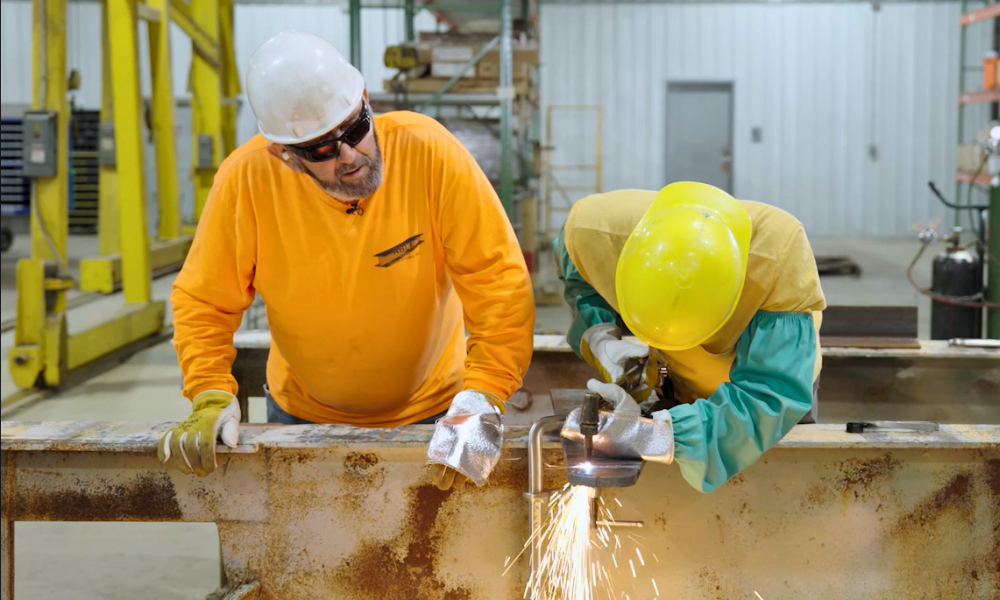
We have a number great examples you can can look through. Here’s one: the American Institute of Steel Construction wanted fabricators to strengthen skills that directly impacted project outcomes. They also wanted to improve retention by helping employees find success faster. Two important business goals! Together, we created custom training that was engaging, practical, and rooted in real-world performance. (We also can’t help but mention that the program continues to win awards, most recently a Brandon Hall Group Gold!)
The result? Learners made better decisions, with fewer errors and greater confidence on the job. Only strategically-designed custom learning could accomplish that.
Key Takeaways for Annual Planning
- Don’t press pause on learning. Uncertainty means you need people who know how to adapt. That’s only possible through continuous, intentional development.
- Align learning with business goals. Every hour and dollar should drive measurable impact. Don’t waste money or time on training you can’t connect to the behaviors you need.
- Prioritize quality over quantity. Fewer, better-designed learning experiences will outperform plethoric generic programs every time.
- Choose partnership over products. The right design partner helps you clarify goals, target behaviors, and create learning that truly changes behavior.
Take the Next Step
No year should be defined by limitation. Make it a year of purposeful, impactful learning.
As you’re thinking about your training strategy for the days ahead, the next step is a conversation. Together, we can design custom learning that fits your goals, your budget, and your people, no matter the economy.
Author

Brooke Wood is the Brand Manager for Artisan Learning. While marketing is her expertise, her love of learning and professional development drew her to her current role at Artisan. She works with staff across the organization to champion the very real benefits of custom-designed learning. When she’s not off-roading in her beloved Toyota 4Runner, that is!